SDECE Action Service
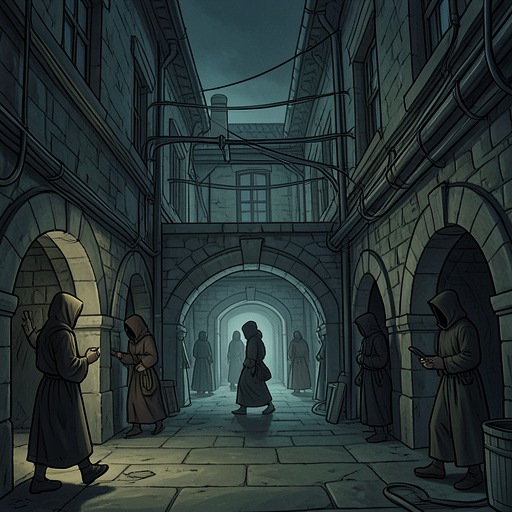
The Day of the JackalThe SDECE Action Service is the operational branch of the SDECE, headed in the novel by Colonel Rolland and based at Porte des Lilas. It sits within France’s security apparatus as a body expected to act against clandestine threats, but its effectiveness depends on intelligence that can identify a target. The investigation into the threat against Charles de Gaulle exposes both the branch’s capacity for secret work and the limits imposed by an adversary whose name and documents are unknown.
Place in the security apparatus
At the Interior Minister’s security conference, General Guibaud, head of the SDECE, sits beside Colonel Rolland, identified as chief of the Action Service. Rolland has prepared the report distributed to the men around the table. The arrangement places the Action Service within a larger national response that includes police and presidential security officials, rather than presenting it as an independent force able to take over every part of the investigation.
That institutional distinction matters. The wider security system has records, border checks and police branches, but those resources cannot be directed effectively at an unnamed person. In the conference discussion, Claude Lebel reasons that the SDECE cannot identify the assassin through its agents in the OAS because the OAS itself does not know who he is. He adds that the Action Service cannot destroy a man it cannot identify. The problem is not simply a lack of manpower or authority: without a name, there is no reliable face or passport to pursue. The first necessary work is therefore detective work to establish identity, a task that must also remain secret.
Following the Kowalski lead
The Action Service comes into contact with the investigation through a document trail reaching back to Viktor Kowalski’s military service. In 1961, after Kowalski’s name becomes associated with terrorism in Bone and Constantine, his dossier is recovered from the archives of the Ministry of the Armed Forces in Paris. The file includes a will naming the daughter of Josef Grzybowski as the beneficiary of Kowalski’s possessions. A visit to the Grzybowskis brings the story behind the document to light; Kowalski himself never learns that the authorities have uncovered it.
The episode shows how an old administrative record can become an intelligence lead when circumstances change. The dossier was not created as a current report on the assassination threat: it preserved the will Kowalski made before a combat mission, when the possibility of leaving something to his daughter was newly put to him. Once his name attracts the attention of the security forces, the document points investigators toward a personal connection otherwise concealed from them. The account assigns the file’s discovery and the visit to the Action Service associated with Rolland’s office, but does not describe the visit’s precise investigative procedure.
Rolland and clandestine communication
The branch’s secrecy is also visible in Rolland’s communications with an operative. Late at night, after a lengthy interrogation has produced Kowalski’s confession, a call reaches Rolland while he is dining with friends. The operative identifies himself, and Rolland answers using the correct prearranged word. To anyone overhearing, the conversation sounds like a routine message that his car has been repaired and is ready to collect. The cover keeps the call’s actual significance concealed in an ordinary exchange.
Rolland promptly leaves the restaurant, drives through the city to the office at Porte des Lilas, and resumes work there. The top copy of Kowalski’s confession is brought to him with his coffee. He reads the twenty-six-page account three times, moving from a quick assessment to a slower review and then marking passages in black ink. He crosses out material about Sylvie, her illness, and Kowalski’s personal history, including his service in the Legion and in Indochina. The scene presents Rolland as a senior reader of operational intelligence: he sorts a dense confession for information pertinent to the work rather than treating every detail as equally useful.
Rolland’s position also connects the Action Service to the wider conference process. His report is placed before senior officials, and the service’s knowledge is considered alongside police and security assessments. The novel thereby shows intelligence moving through several stages: information is collected in an interrogation, transmitted discreetly, reviewed by the branch chief and incorporated into a report for decision-makers.
Capability and limits in the manhunt
The Action Service is part of an extensive response, but the ensuing pursuit is collective. Police records, border information, hotel registrations, telephone monitoring and street searches belong to different parts of the state apparatus. When the authorities examine the assassin’s apparent identity as Alexander Duggan, records show that he entered France from Brussels on the Brabant Express on July 22 and left for Brussels on July 31. A hotel card links Duggan to a small hotel near the Place de la Madeleine. These discoveries demonstrate the potential value of accumulated records, but they do not mean the Action Service alone found or controlled every part of the trail.
As the investigation develops, Lebel argues that the assassin has learned both that the plot is exposed and that his Duggan identity has been uncovered. He may have received a warning through a leak or a clandestine contact; the authorities suspect Valmy, but do not establish the source with certainty in these discussions. The changing information makes the target harder to contain: the security apparatus must revise its picture while the assassin can alter his plans and identity. The Action Service’s central limitation, first stated at the conference, remains the organizing difficulty of the pursuit—operational force can only be brought to bear once investigators know whom they are seeking.
In the final days of the search, the scale of the response extends far beyond any single service. Hotels and lodging houses are checked, suspected sympathizers’ homes are raided, and large numbers of state employees and people in the underworld are enlisted to watch for the fugitive. The evidence does not assign this citywide operation exclusively to the Action Service. Its significance instead lies in the contrast between institutional reach and actionable knowledge: the state can mobilize a vast network, yet its agencies still have to convert scattered records, testimony and observations into a usable identity before they can stop the assassin.